
• Blaise Alexander Hyundai

Blog

Is a Used Hyundai Elantra Reliable? Expert Tips

used Hyundai Elantra

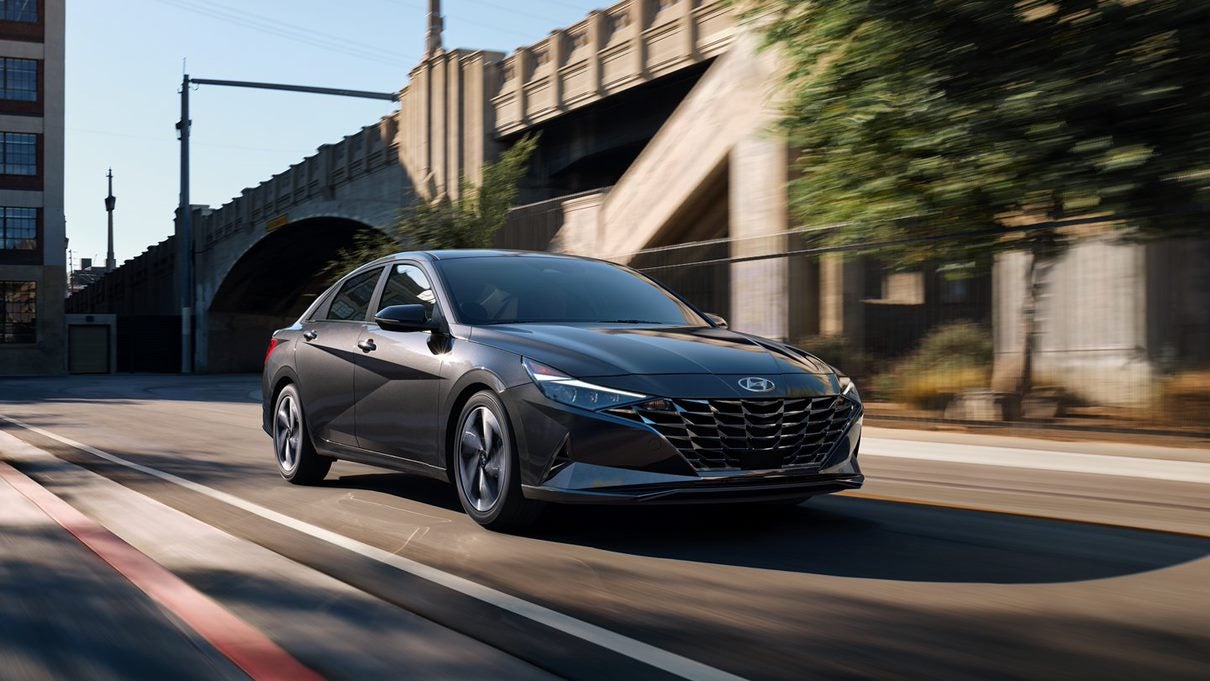
Is a used Hyundai Elantra reliable? Absolutely. With J.D. Power's Great reliability ratings and lower-than-average maintenance costs, the Hyundai Elantra consistently ranks among the most trustworthy compact sedans available. The team of experts at Blaise Alexander Hyundai of State College is here to help drivers discover why a pre-owned Hyundai Elantra model is a smart choice.

Why Used Hyundai Elantra Models Earn Top Dependability Ratings

Pre-owned Hyundai Elantra models demonstrate exceptional consistency through impressive third-party evaluations. J.D. Power, the automotive industry's most trusted reliability authority, awards the Hyundai Elantra an outstanding 86 out of 100 predicted reliability score. This places the model firmly in the J.D. Power Great category for long-term performance.

U.S. News reinforces this assessment with its own 86 out of 100 reliability rating. Even when purchasing pre-owned, this vehicle benefits from comprehensive Hyundai warranty coverage, including the industry-leading 10-year/100,000-mile powertrain warranty for original owners. Well-maintained versions from 2011-2015, 2017, 2019, and 2021-present commonly reach 150,000 to 200,000 miles, with many exceeding 250,000 miles.

Smart Maintenance Tips for Long-Term Performance

Keeping your Hyundai Elantra running smoothly requires consistent attention to key service intervals. Change engine oil every 7,500 miles or six months, whichever comes first, and monitor tire pressure monthly using the built-in monitoring system, maintaining 33 PSI for peak performance.

Schedule brake fluid replacement every 30,000 miles and inspect drive belts at major service intervals. Replace air and oil filters regularly for efficient engine operation, typically during a full oil change service. Following recommended Hyundai maintenance schedules helps prevent costly repairs and extends vehicle life significantly.

Find Your Reliable Hyundai Elantra in State College, PA

Ready to discover why the pre-owned Hyundai Elantra makes such a smart choice? Visit Blaise Alexander Hyundai of State College to explore our quality selection of inspected pre-owned vehicles. Our certified service technicians provide expert maintenance services using genuine Hyundai parts. Schedule your test drive today!
Recommended Posts

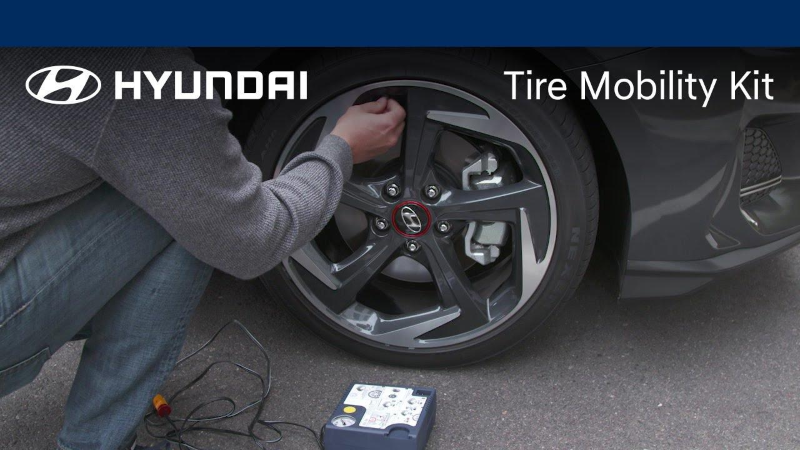
Hyundai tire mobility kit

Where Is the Spare Tire in Your Hyundai? A Model-by-Model Guide

Nothing interrupts a drive like a flat tire, and knowing where to find your emergency equipment can make a stressful situation easier. Your Hyundai spare tire location, or whether your vehicle includes a spare at all, depends on its model, trim, and powertrain. Blaise Alexander Hyundai of State College explains what to look for before an unexpected flat leaves you stranded. Which Hyundai Models Have Spare Tires? Several popular Hyundai vehicles include compact temporary spare tires. Common configurations and locations include: 2026 Hyundai Elantra: A temporary spare beneath the trunk's cargo floor. 2026 Hyundai Sonata: SE and SEL Sport trims include a compact spare beneath the trunk floor. 2026 Hyundai Tucson: Gas-powered trims include a compact spare beneath the rear cargo floor. 2027 Hyundai Santa Fe: Gas-powered models feature a temporary spare mounted underneath the vehicle. 2027 Hyundai Palisade: Gas-powered models include a compact spare mounted beneath the rear of the vehicle. Always consult your owner's manual to confirm the equipment and location for your specific vehicle. Which Hyundai Models Have Tire Mobility Kits? Some Hyundai vehicles replace the spare tire with a tire mobility kit containing a compressor and sealant. Examples include the 2026 Hyundai Sonata N Line and Hybrid trims and the 2027 Hyundai Santa Fe Hybrid. These kits can temporarily address certain small tread punctures but cannot repair sidewall damage or major tire failures. Follow your vehicle's instructions carefully, including restrictions on speed and driving distance. What Should You Do After a Flat Tire? Pull over somewhere safe, activate your hazard lights, and avoid changing a tire near moving traffic. If conditions are unsafe, contact roadside assistance. For vehicles with a compact spare, follow the owner's manual for proper lifting points, installation procedures, and driving restrictions. A temporary spare is intended for limited use until the damaged tire can be repaired or replaced. Get Hyundai Tire Assistance in State College, PA Checking your spare tire or mobility kit before an emergency helps you prepare for unexpected road conditions. Remember to inspect spare tire pressure and verify that your emergency equipment is accessible. Contact Blaise Alexander Hyundai of State College for tire inspections, repairs, or replacement assistance. Our service team can help you get back on the road with confidence.

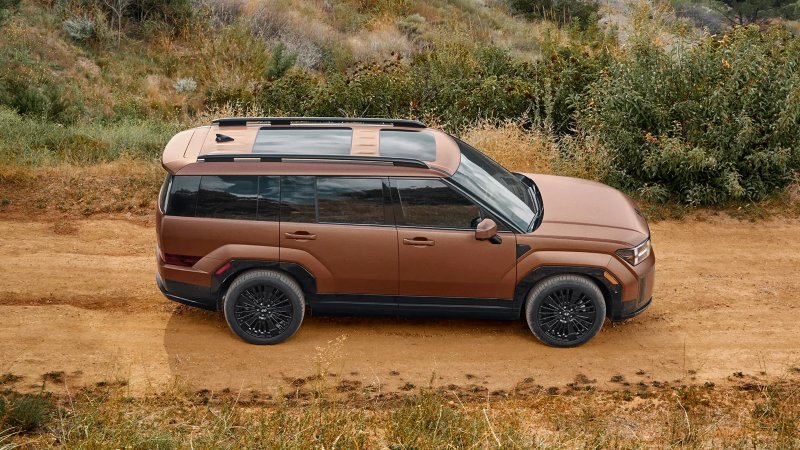
2027 Hyundai Santa Fe on a dirt road

2027 Hyundai Santa Fe Gas vs. Hybrid: Which Fits Your Lifestyle?

The 2027 Hyundai Santa Fe offers two powertrain options to suit different driving needs. Choose gas when horsepower and towing take priority, or hybrid when everyday fuel efficiency matters most. Blaise Alexander Hyundai of State College compares both options to help you find the right fit. Choose Gas for Power and Towing If your weekends include pulling a camper or utility trailer, the gas-powered Hyundai Santa Fe is worth considering. Its 2.5-liter turbocharged four-cylinder engine delivers 277 horsepower, offering more power than the hybrid. Most gas trims can tow up to 3,500 lbs with trailer brakes, while the rugged Hyundai Santa Fe XRT increases that capacity to 4,500 lbs when properly equipped. The Hyundai Santa Fe XRT also comes standard with HTRAC all-wheel drive, making it especially appealing for outdoor adventures and changing road conditions. Choose Hybrid for Everyday Efficiency A week filled with commutes, school runs, and errands makes fuel efficiency especially valuable. The Hyundai Santa Fe Hybrid combines a 1.6-liter turbocharged engine with an electric motor to produce 231 total system horsepower and 271 lb-ft of torque. This combination delivers responsive acceleration while using less fuel than the gas model. Regenerative braking and the gasoline engine recharge the hybrid battery as you drive, eliminating the need to plug in. Plus, the Hyundai Santa Fe Hybrid can tow up to 2,000 lbs with trailer brakes, providing capability for lighter towing needs. Keep the Family Flexibility Regardless of your preferred powertrain, the 2027 Hyundai Santa Fe provides three rows of seating and available HTRAC all-wheel drive. Fold the rear seats to accommodate bulky cargo, or keep them upright when you need extra passenger space. Both versions deliver the versatility families need, whether you're navigating daily commutes or packing for a weekend getaway. Find Your 2027 Hyundai Santa Fe in State College, PA Choosing between gas and hybrid power comes down to how you drive. Visit Blaise Alexander Hyundai of State College to explore your options and compare available models. Our team can help you find the ideal combination of performance, efficiency, and versatility for your lifestyle.

Woman charging a Hyundai Tucson PHEV

Hyundai Tucson Plug-In Hybrid: Is a PHEV Right for You?

A plug-in hybrid can cover much of your daily driving on electricity while keeping a gas engine ready for longer trips. Whether the Hyundai Tucson PHEV makes sense for you comes down to how far you drive, where you charge, and which trade-offs suit your lifestyle. Understanding those factors can help you decide whether a plug-in hybrid belongs in your driveway. Your Daily Miles Tell the Story The biggest benefit of the Hyundai Tucson PHEV comes when your routine fits comfortably within its electric driving capability. Regularly charging the battery can allow many commutes, errands, and school runs to be completed primarily on electric power, while the gasoline engine remains available when you need to travel farther. Think about what a typical week actually looks like. If most trips are relatively short and you can recharge between them, a plug-in hybrid can make excellent use of its electric capability. If you routinely cover long highway distances, you'll spend more time using the gasoline engine, reducing one of the PHEV's biggest advantages. Charging Access Makes the Difference Home charging is where a plug-in hybrid can be especially convenient. With access to a compatible Level 2 charger, you can replenish the battery between drives and begin many days ready to take advantage of electric power. Without reliable access to home or workplace charging, however, you may not realize as much of the benefit that comes with choosing a PHEV. In that situation, the Hyundai Tucson Hybrid may be worth considering because it doesn't need to be plugged in to recharge its hybrid battery. The Trade-Offs Worth Knowing A plug-in hybrid asks you to think differently about cost and convenience. The Hyundai Tucson PHEV may carry a higher purchase price than a comparable conventional hybrid, so its electric-driving capability is most valuable when you have the opportunity to use it regularly. Charging also becomes another part of your routine. Drivers with convenient home charging may barely notice the extra step, while those who depend primarily on public chargers could find a conventional hybrid easier to live with. Depending on configuration, battery packaging can also affect factors such as cargo capacity, so compare the specifications that matter most to your everyday needs. Explore the Hyundai Tucson PHEV in State College, PA If you mostly drive shorter distances and can plug in regularly, the Hyundai Tucson PHEV can offer an appealing combination of electric driving and gasoline-powered flexibility. Drivers who frequently travel longer distances or don't have convenient charging access may find the Hyundai Tucson Hybrid better suited to their routine. Our team at Blaise Alexander Hyundai of State College can help you compare both options and determine which one better fits your driving habits.